
Popular Searches:foot scanner | 3D scanner | 3D Printer | Design Software |



Tel :0755-86131192 86180201
Fax :0755-86180213
E-mail: [email protected]
Website: www.mmd000.cn
Address: 3A05, Minzhi Chamber of Commerce Building, Minzhi Avenue, Longhua District, Shenzhen
Are you here: Home > News > Industry NewsIndustry News
How to Quickly Identify Flatfoot Using a Foot 3D Scanner?
Time:2025-01-20 15:13:50Source:深圳市精易迅科技有限公司Views:528
Flatfoot is a common foot condition characterized by a lowered or completely collapsed arch, resulting in an increased contact area of the sole. Traditional diagnostic methods, such as clinical observation, footprint analysis, and imaging techniques, often face limitations in accuracy and efficiency. With the advent of digital technology, foot 3D scanners have become an essential tool for the rapid identification of flatfoot. Their high precision and intuitive data presentation provide a novel approach to clinical diagnosis.
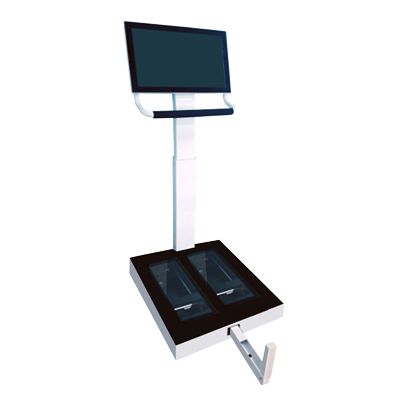
Technical Advantages of Foot 3D Scanners
Foot 3D scanners use optical imaging, laser scanning, or structured light technology to capture the three-dimensional morphology of the foot and generate high-resolution digital models. Compared to traditional 2D footprints or imaging methods, these scanners offer more comprehensive and precise data on the arch structure.
Foot 3D scanners can capture intricate details of the foot in real time, accurately recording key parameters such as arch height, foot length, and width. Their resolution typically reaches the millimeter level or higher, ensuring reliable data for clinical evaluation. The scanning process is quick and non-invasive, making it suitable for patients of all age groups, including children and the elderly. The generated 3D models provide an intuitive representation of the foot's anatomy, enabling both doctors and patients to better understand affected areas and the severity of the condition.
Steps for Identifying Flatfoot
Preparation and Calibration
Ensure the scanner is calibrated, and the scanning environment is clean and level before use. The scanning platform should be stable, free from sliding or tilting, to ensure accurate data collection.Preparing the Subject
The subject must remove their footwear and socks to expose the feet. Both feet should be placed flat on the scanner's platform, standing naturally with legs slightly apart to maintain balance.Data Acquisition
Once the scanner is activated, its sensors quickly capture the 3D data of the foot's surface. The scanning process typically takes only a few seconds. The scanner records the shape of the sole, arch distribution, and structural variations. For dynamic analyses, some scanners can capture data in walking or weight-bearing conditions.Data Processing and Model Generation
The captured data is transferred to an analysis system, where specialized software generates a 3D digital model. Physicians can examine the foot structure from various angles and focus on critical parameters such as arch height, contact area, and the distance between the arch's apex and the ground.Interpretation and Diagnosis
Based on the model and analytical data, physicians can evaluate the arch's condition. A significantly reduced arch height, enlarged contact area, and accompanying symptoms such as foot pain or gait abnormalities are indicative of flatfoot. Flexible flatfoot or rigid flatfoot can be further distinguished based on whether the arch collapses under load.
Clinical Value of Foot 3D Scanners in Flatfoot Diagnosis
Foot 3D scanners can rapidly collect and analyze data, making them ideal for large-scale screening programs such as school health checks or athlete evaluations. Regular scans allow physicians to track changes in the arch's morphology, providing quantitative evidence for treatment effectiveness. Based on scan results, physicians can customize corrective insoles or recommend other tailored interventions such as physical therapy or surgical procedures.
The adoption of foot 3D scanners offers a cutting-edge solution for the rapid identification of flatfoot. Their precision, intuitive data visualization, and non-invasive nature make the diagnostic process more efficient and reliable. By leveraging this technology, physicians can develop personalized treatment plans that enhance foot health and improve patients’ quality of life. With continued advancements in scanning technology, these devices are poised to play an even greater role in diagnosing flatfoot and other foot conditions in the future.